

U.S. Department of Transportation Secretary Sean P. Duffy today unveiled the nation’s first ever Advanced Air Mobility (AAM) National Strategy, including 40 recommendations to safely and efficiently support AAM operations.
According to U.S. Transportation Secretary Sean P. Duffy. “Advanced air mobility vehicles will benefit the American people – transforming how the flying public travels, how first responders jump into action and communities access healthcare, how businesses deliver goods, and how we defend our nation. I look forward to working together to make this dream a reality.”
Strategy timetable for advanced air mobility
- By 2027, there will be demonstrations and initial operations for contemporary aircraft as we leverage and modify our extensive airport infrastructure. We will encourage a full U.S.-based supply chain, encompassing automation technology companies with highly efficient avionics, advanced carbon component manufacturers, and telecommunications providers, which could increase radio spectrum versatility.
- By 2030, there will be new air operations in multiple urban and rural areas, including quiet flights with Powered Lift aircraft, and short-takeoff-and-landing flights that will increase travel options and reduce noise impacts. These operations may fly from new and accessible vertiport infrastructure that will be funded mostly by private sources, able to reach new areas of the country and helping to address transportation gaps such as over-water and rural flights. We will take advantage of full-scale air traffic modernization as envisioned in the United States Department of Transportation (DOT) “brand new state-of-the-art Air Traffic Control system” to establish efficient, low-altitude traffic management for AAM and unmanned aircraft, such as drones that are already deployed.
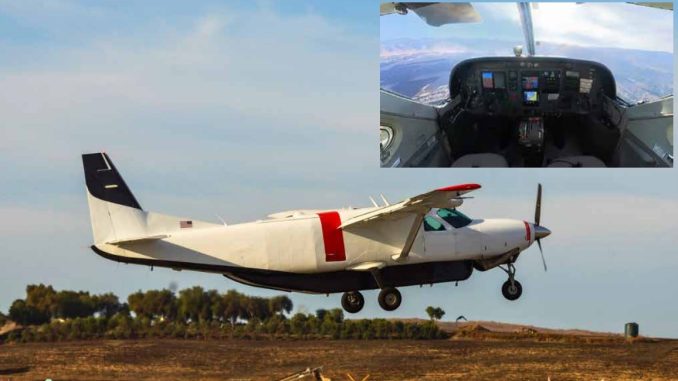
- By 2035, there will be advanced air operations with exciting use cases, including fully autonomous flight in geographies with insufficient labor or harsh conditions that might otherwise limit flights from operating—advancing possibilities.
The Strategy, developed by the Advanced Air Mobility Interagency Working Group, is organized around six key pillars (Airspace, Infrastructure, Security, Community Planning and Engagement, Workforce, and Automation) essential to building a strong AAM system. The Strategy sets out 40 recommendations designed to establish a resilient foundation for national policy.
Here are the key details of the six pillars.
Airspace
- Maintain and mature sound regulatory oversight of airspace safety, security, efficiency, access, and economic competition
- Pioneer a new public-private cooperative model to manage low-altitude airspace, with a vision to integrate advanced aviation safely and efficiently with traditional aircraft
- Modernize systems and management practices, including adapting the Federal workforce to oversee a federated air traffic system to maximize the economic benefits of aviation for all Americans
As air traffic volume increases, the FAA will adopt a new approach to evolve airspace management models to enable a more automated, flexible, and scalable environment. One concept under consideration is the integration of cooperative operating practices within defined portions of airspace (called “cooperative areas”), supported by multiple service providers operating under FAA rules and oversight. Operators will use FAA-approved services to meet defined performance requirements and assist in managing growing operational demand in designated airspace. Rather than a wholesale shift, this approach will support a transition to more distributed models and cooperative operations, enabled by approved systems and providers that are interoperable with the existing ecosystem
Infrastructure
- Adapt existing infrastructure for new uses and technologies, leveraging current assets for immediate benefits Improve energy planning and distribution in aviation
- Develop spectrum solutions for future mobility needs
- Develop additional weather networks and forecasting capabilities
- Achieve new levels of accessibility, competition, and interoperability
While existing facilities are not currently purpose-built to accommodate AAM, their use could lower initial barriers to entry for new AAM operations in both urban and rural environments. Existing facilities may require minor modifications to enable near-term operations and could present communities with attractive means to connect to the national commercial aviation system affordably, turning the local airport into an economic hub.
While communities may accommodate initial AAM operations with existing infrastructure, timely scaling of AAM will require advance planning to ensure a network of private- and public-use vertiports is available, utilities can meet the demands of multiple operators, AAM complements traditional transportation options, and AAM is accessible to a broad user base
Security
- Apply existing security frameworks immediately as needed
- Develop a risk-based approach to identify and address potential physical, personnel, and cybersecurity threats to AAM operations, with enhanced coordination between agencies
- Develop resilient security measures for AAM manufacturing and service in the United States to promote independence and economic vitality
In the physical security domain, a key challenge is ensuring adequate resources for vetting and screening processes. While the exact personnel and technology requirements will require further analysis, AAM operators have proposed future operations in which aircraft access new entry points to large A Bold Policy Vision for 2026–2036 23 airports, including areas beyond TSA checkpoints. This will necessitate robust vetting, screening, and secure transfer of both passengers and luggage. Continuously assessing and providing the necessary personnel and technology for these tasks will be an ongoing requirement.
Community planning and engagement
- Help local officials and government leaders better understand the roles and responsibilities of each stakeholder in the delivery of AAM to their communities
- Provide a repository of best practices and resources to assist local officials and government leaders to communicate with the public
- Develop new resources to measure noise impacts of AAM
- Promote accessibility in AAM aircraft and operations
AAM could significantly change the relationship between aviation and local communities. Currently, aviation services are delivered from large commercial service or general aviation airports, with impact issues discussed or debated in community engagement forums such as airport sponsored roundtables. AAM offers the potential to introduce new, smaller facilities that could be tightly integrated into communities—both rural and urban—rather than located separate from population centers. This elevates the importance of both community engagement and decision-making at the local level as the AAM ecosystem evolves. The novel and emerging nature of AAM operations and aircraft elevates the need for the AAM industry to play a significant role in this engagement.
Workforce
- Expand the aviation workforce and the number of aviators, while managing introduction of new and automated technologies to improve safety and public welfare
- Create new pathways to aviation careers
- Incorporate aviation skills into technical education programs
- Create opportunities for upskilling and retraining existing workforce
As a new entrant in air transportation, AAM has the potential of bringing skilled jobs to U.S. communities. The personnel to fill these jobs will require special training (e.g., high voltage systems repair, software assurance). There will be new opportunities within an aviation industry already in need of more pilots, maintenance personnel, air traffic controllers, and other skilled personnel.
Automation
- Enable automated AAM flight into the future airspace
- Coordinate testing and evaluation methods to shrink development time and cost
- Position the United States as the world leader in automated flight
To overcome future airspace challenges, a bold transformation is needed for airspace operations and safety. While humans must remain a key component in safe aircraft systems operations, the future airspace envisions humans working in concert with automation and intelligent systems to accomplish tasks safely and more consistently while scaling airspace operations. This approach reduces the need for manual orchestration of operations and increases the use of automation to operate vehicles safely through simplified vehicle controls, upset recovery, and integrated resilient vehicle control.
For more information
https://www.transportation.gov/briefing-room/trumps-transportation-secretary-sean-p-duffy-launches-first-ever-national-advanced