

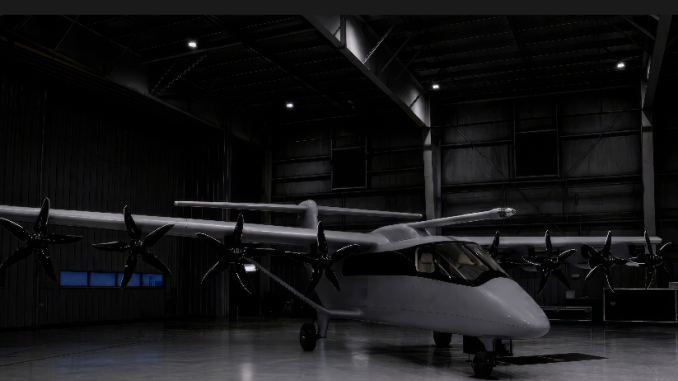
Electra Defense today announced it has received a USD4.7 million innovative capabilities opening (ICO) contract award from the Air Force Research Laboratory (AFRL) to advance hybrid-electric aircraft power and propulsion technologies through a comprehensive program of ground testing and flight testing.
“The ICO will support testing and evaluation of Electra’s EL9 aircraft and its hybrid-electric propulsion systems, generating critical performance data to help the U.S. Air Force assess the potential of next-generation ultra-short takeoff and landing (Ultra-STOL) aircraft for military operations,” said the company in a press release. “The effort will also examine how hybrid-electric aviation can expand operational access, strengthen distributed logistics, and support the Air Force’s Agile Combat Employment (ACE) doctrine.”
In 2023, Electra received a Strategic Funding Increase (STRATFI) award valued at up to USD85 million to support development of its full-scale preproduction aircraft. That collaboration has since included flight demonstrations and government-directed testing, most recently during AFRL’s Future Flag 25-3 exercise in 2025, where Electra demonstrated the potential of Ultra-STOL aircraft and hybrid-electric propulsion to support runway-independent distributed military operations and mobile power generation, said the company.
Under the contract, Electra will conduct a series of technical evaluations focused on aircraft performance, hybrid-electric propulsion system functionality, and operational effectiveness. The effort includes verification of key hybrid-electric power and propulsion technologies, extensive ground testing of the EL9 preproduction aircraft, and acoustic flight testing to characterize the ability to conduct battery-only low-signature ingress and egress for special operations missions. The program will also evaluate the potential operational advantages of hybrid-electric ultra-STOL aircraft through modeling and simulation, including their ability to operate from a wider range of locations, support the rapid dispersal of personnel and time-sensitive cargo, and reduce dependence on traditional aviation infrastructure and ground support equipment. The findings will help inform future Air Force technology development and acquisition decisions.
For more information
(Image: Electra)