

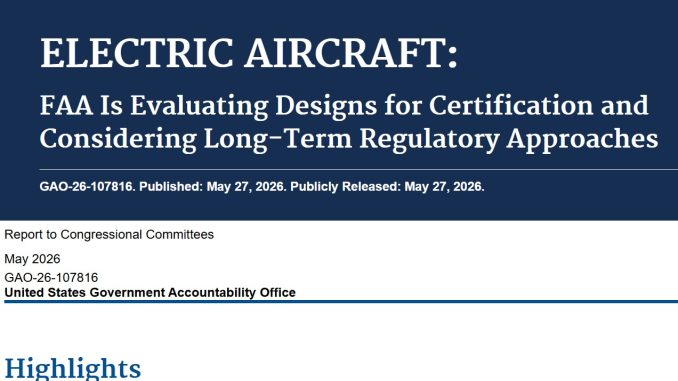
According to US Government Accountability Office (GAO) report into the extent of infrastructure deployed at U.S. airports to support electric aircraft and the Federal Aviation Administration’s (FAA) approach to certificating the airworthiness of electric aircraft designs “airports face a variety of challenges related to installing infrastructure for electric aircraft, including cost, uncertainty about demand, and availability of reliable electricity.”
The report’s high level conclusions say:
“The infrastructure to support electric aircraft at U.S. airports is currently limited. According to FAA, as of December 2025, 47 airports have identified charging stations for electric aircraft in airport plans. The majority of these airports are part of the manufacturer BETA Technologies’ network of charging stations. According to FAA officials and selected stakeholders, airports face a variety of challenges related to installing infrastructure for electric aircraft, including cost, uncertainty about demand, and availability of reliable electricity.”
According to industry views on the FAA’s certification approach, there remains several challenges around the resources available to the regulator for this work.
“As of March 2026, FAA is evaluating electric aircraft and engine designs for certification on a case-by-case basis, but is considering regulatory changes, such as developing dedicated airworthiness standards for electric vertical takeoff and landing aircraft, that could standardize its approach to evaluating these products in the long term. Stakeholders described challenges with FAA’s approach, including insufficient FAA staff with expertise in electric propulsion and limited standardization in the certification process. According to FAA officials, they have hired engineers in disciplines such as propulsion, and deployed experienced personnel as needed to emerging technology areas. However, ensuring that planned skill gap assessments are quantitative and include all mission-critical occupations, as GAO recommended in 2021, would help FAA better understand the skills its workforce needs to respond to technological changes.”
For more information
https://files.gao.gov/reports/GAO-26-107816/index.html?_gl=1*4nndrd*_ga*ODEwOTQwMzkzLjE3Nzk5MTc5OTA.*_ga_V393SNS3SR*czE3Nzk5MTc5OTAkbzEkZzEkdDE3Nzk5MTg1MTckajU5JGwwJGgw