

Skyfly Technologies has announced at EAA AirVenture Oshkosh that it will make its electric propulsion technology available to other aircraft original equipment manufacturers (OEMs) as an enabling technology for electric flight through the secondary market, giving OEMs flexibility in how they integrate it across a range of aircraft configurations. Alongside this, Skyfly unveiled a hybrid propulsion system aimed at unmanned aircraft platforms using distributed electric propulsion (DEP).
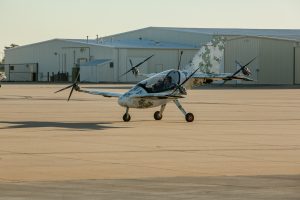
“Together, the two announcements extend Skyfly’s propulsion technology beyond its own aircraft platform and into new segments of the market,” said the company in a press release. “The announcement coincides with the unveiling of Skyfly’s production-spec aircraft, on display at stand VL-3 throughout the show.
“We’ve been engineering a propulsion system built specifically for the demands and safety requirements of light sport aircraft,” said Michael Thompson, CEO, Skyfly Technologies. “Opening that technology to the wider OEM community means other manufacturers no longer have to build this capability from scratch. Our architecture works across a range of aircraft configurations, so OEMs can bring an electrified aircraft to market faster, with propulsion technology that’s already engineered around the rules we helped write. Alongside that, our Hybrid Propulsion System addresses a very different need – giving unmanned platforms using distributed electric propulsion the range and endurance that pure battery-electric systems can’t yet match. And with our production aircraft here on stand VL-3, attendees can see exactly what our electric propulsion technology enables in a real, flying platform.”
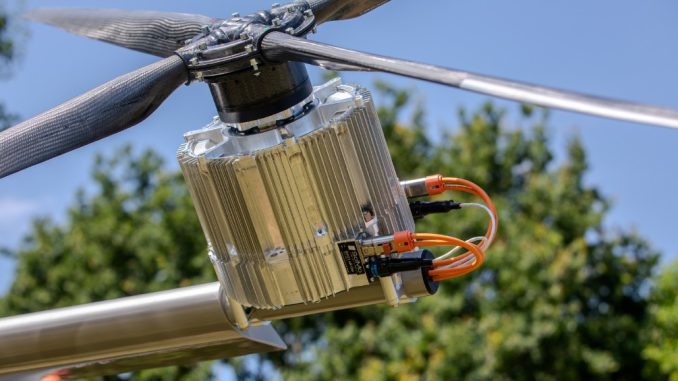
At the core of the offering, says the company, is the Integrated Motor Inverter, a compact, high-efficiency motor and inverter unit co-developed with German engineering firm, SciMo. “The architecture is designed to support a range of aircraft configurations and can be considered a direct swap for a Rotax 100hp engine. The motor is paired with a bespoke Power Distribution Unit (PDU), purpose-built for Skyfly’s architecture and LSA safety requirements, and a High energy density 800v class battery system. The Power Distribution Unit and battery modules complete the electric propulsion system. The battery system is a bespoke, high energy 800v class architecture, developed in-house to meet the performance and safety demands of certified LSA operation. Full specifications for both will be released ahead of availability.”
Alongside the EPS announcement, Skyfly also unveiled its Hybrid Propulsion System, purpose-built for unmanned aircraft that use distributed electric propulsion (DEP). Rather than targeting the LSA segment, the system is designed to give DEP-based unmanned platforms the extended range and endurance that pure battery-electric architectures struggle to deliver. Built around a light, high-power turbine generator, the system extends range up to 400+ miles, with the ability to charge in flight and recharge on the ground when off-grid. Compatibility with JP8 fuel extends the system’s relevance beyond civil UAS applications into military use, says the company.
For more information
(Image: SkyFly)